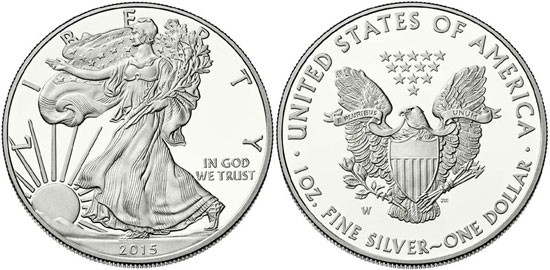
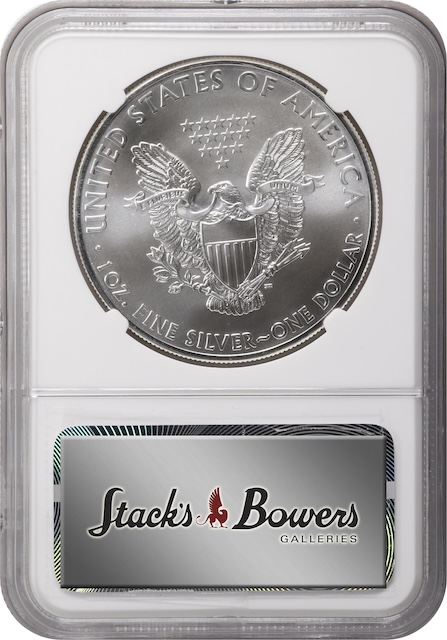
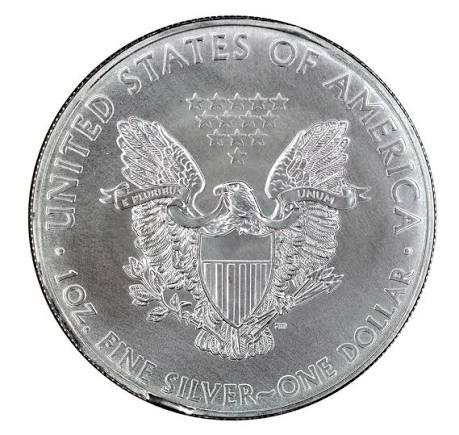
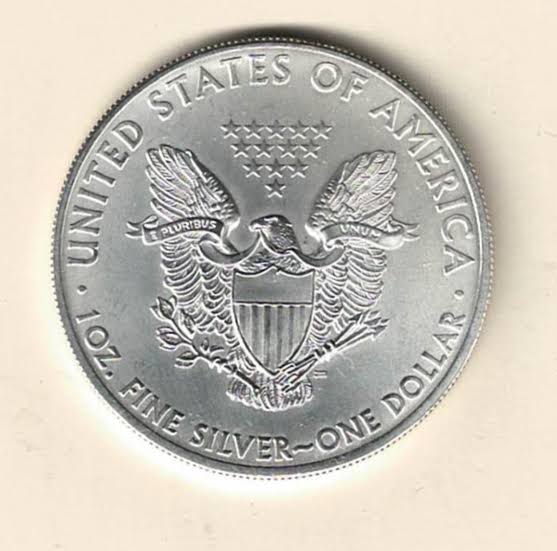
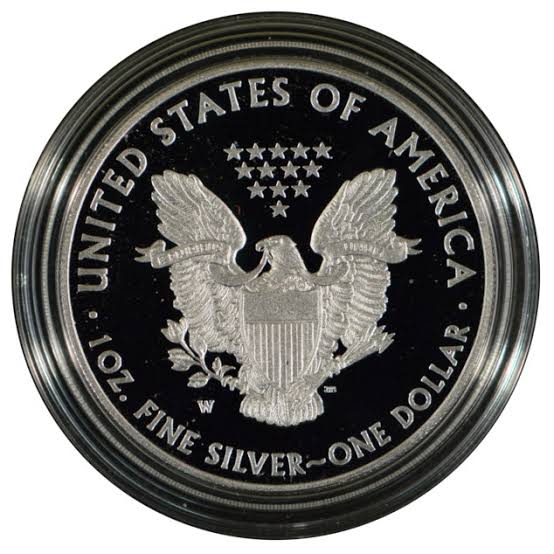
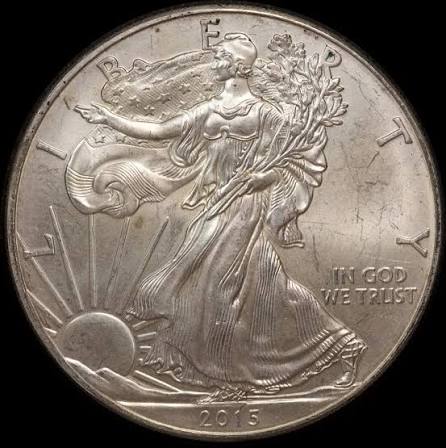
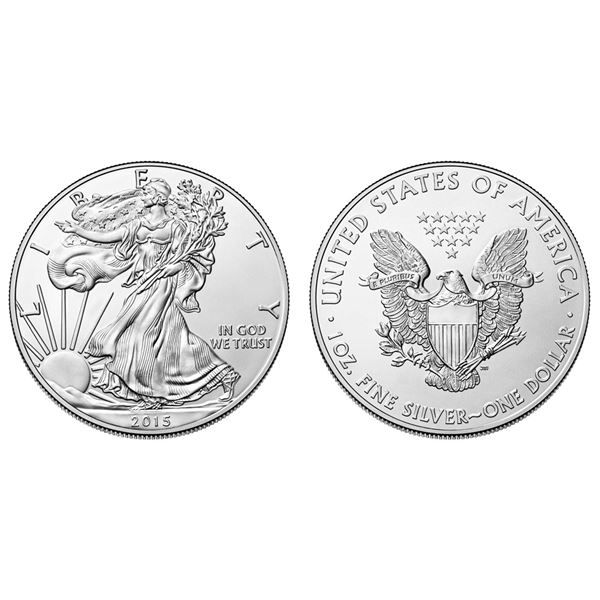
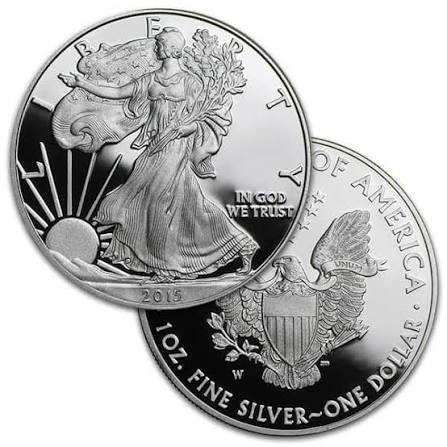
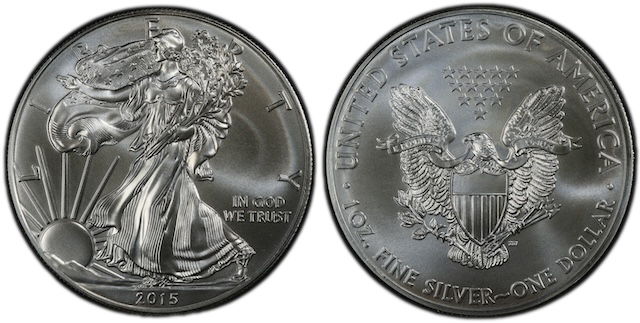
A 2015-(P) Philadelphia-struck Silver Eagle in MS-70 realized $2,640 at Stack's Bowers auction — yet the coin looks identical to a standard $55 bullion piece. Knowing which version you hold is the difference between spot price and a serious collector premium. Greysheet lists the (P) issue range at $360–$4,750.
★★★★★ 4.8/5 · Trusted by 1,347 coin collectors
Check My 2015 Silver Dollar Value →
The table below shows estimated retail value ranges across all 2015 Silver Eagle issues and conditions. Values reflect current market data based on PCGS auction records and dealer price guides. For a thorough in-depth 2015 Silver Eagle identification walkthrough, consult the complete 2015 Silver Eagle reference guide on CoinValueApp, which covers every variety with full photo documentation.
| Variety | Worn / Raw BU | MS-69 Certified | MS-70 Certified | Gem / PR-70 (Proof) |
|---|---|---|---|---|
| 2015 Bullion (no mark) | $50 – $65 Common | $55 – $75 | $70 – $105 | — |
| ⭐ 2015-(P) Philadelphia Strike | Not attributable raw | $200 – $500 Valuable | $360 – $4,750 Rare | — |
| 2015-W Burnished (Uncirculated) | $65 – $85 | $75 – $100 | $70 – $105 Modest | — |
| 2015-W Proof | — | $70 – $110 | — | $80 – $150 (PR-70 DC) Modest |
| 🔴 2015 Curved Clip Error | Fewer than 6 known — insufficient public market data; check PCGS Pop Report | Extremely Rare | ||
| 2015 Missing Edge Lettering (Presidential Dollar) |
$20 – $60 | $80 – $200 | $200 – $400+ | — |
🪙 CoinKnow gives you a fast on-the-go way to identify your 2015 Silver Eagle variety and estimate its current market value from your phone — a coin identifier and value app.
Jump to the section most useful to you right now.
Most 2015 American Silver Eagles are pristine bullion coins worth a modest premium over silver spot. The varieties and errors below are the exceptions — specific production anomalies that drive numismatic premiums worth knowing before you sell. Each card covers what the error is, how to recognize it, and what collectors actually pay.
The 2015-(P) Philadelphia Silver Eagle is the most sought-after regular-issue variety of the year. During 2015, supplemental bullion production took place at the Philadelphia Mint alongside the primary West Point facility. Only approximately 79,640 coins were struck at Philadelphia — a tiny fraction of the year's 47-million bullion total — and they carry no mint mark to distinguish them.
To the naked eye, a Philadelphia strike is completely indistinguishable from any other 2015 bullion coin. The only reliable method of attribution is submission to PCGS or NGC, which trace provenance through documented U.S. Mint records and sealed monster-box chain-of-custody. Any uncertified coin offered as a "Philadelphia strike" should be viewed with skepticism.
Because of their extreme rarity within the bullion issue and the impossibility of self-attribution, the collector premium for certified (P)-struck examples is dramatic. PCGS has certified a very small population at MS-70, and auction results confirm prices ranging from several hundred dollars for lower MS grades to well over $2,000 for First Strike MS-70 examples. The 2015-(P) MS-70 sold for $2,640 at Stack's Bowers in 2025.
The 2015 curved clipped planchet error is among the rarest documented mistakes in the entire American Silver Eagle series, which began in 1986. NGC graders identified the error while examining a freshly delivered U.S. Mint sealed monster box containing 500 coins — an extraordinarily rare discovery event for a bullion series known for near-perfect quality control.
The clip appears at approximately the 11 o'clock position on the obverse. Visual diagnostics include a smooth, concave arc of missing metal along the rim between the "B" and "E" of LIBERTY. The corresponding Blakesley effect — a zone of rim weakness directly opposite the clip near the "5" in the date — confirms this as a genuine mint error and not post-mint damage or alteration. On the reverse, rim weakness appears under "SIL" of SILVER and above "OF."
NGC Mint Error specialist David J. Camire stated that fewer than six clipped planchet examples are documented across all American Silver Eagle years combined. This extreme rarity, combined with the prestige of the Silver Eagle series, makes the 2015 clip genuinely significant. The absence of comparable public auction records means precise valuation is impossible; owners should submit directly to NGC or PCGS for authentication and consult a major auction house for a current market opinion.
Presidential Dollars struck in 2015 carry edge lettering that is applied after the main coin strike by a separate Schuler edge-lettering machine. A missing edge lettering error occurs when a coin bypasses this machine entirely, leaving a completely smooth, uninscribed edge. By 2015 the U.S. Mint had significantly tightened quality controls compared to the dramatic "Godless Dollar" errors of 2007–2008, making any surviving 2015 missing-edge-lettering example genuinely scarce.
To identify the error, hold the coin perpendicular and rotate it slowly under a light. A normal 2015 Presidential Dollar edge reads "E PLURIBUS UNUM" with the date and mint mark. A missing-lettering example has a completely blank, flat edge — no inscriptions, no reeding, just smooth metal. Any coin with a smooth edge should be verified by PCGS or NGC before attributing value, as post-mint damage can mimic the error superficially.
Values for confirmed authenticated examples range from roughly $20 for low-grade raw specimens to several hundred dollars for certified mid-grade coins. An MS-68 certified example with missing edge lettering reportedly realized approximately $350 at auction, illustrating how condition dramatically multiplies the error premium. The president depicted on the obverse also affects collector demand within the Presidential Dollar series.
A double edge lettering error on a 2015 Presidential Dollar means the coin passed through the Schuler edge-lettering machine twice instead of once, producing overlapping or doubled inscriptions. Two distinct sub-varieties exist: overlapping double lettering, where both passes ran in the same orientation and the text appears doubled and parallel; and inverted double lettering, where the second pass was reversed, causing the inscriptions to partially cancel out and run in opposing directions.
The inverted sub-variety is the more visually dramatic and commands higher collector interest. Under a 10× loupe, the doubled lettering on the edge is unmistakable — you will see two distinct sets of characters running along the rim, either stacked parallel or colliding head-on. The font strokes appear thicker where they overlap. This is visually different from a weak strike, where lettering is faint but singular.
Given the tightened quality controls on the 2015 Presidential Dollar production run — these coins were issued only as NIFC (Not Intended for Circulation) collector pieces by 2015 — documented double edge lettering examples are genuinely scarce. Values depend heavily on the sub-variety (inverted commands premium over parallel), the specific president depicted, and the certified grade. Certified examples in MS-66 or higher with a dramatic inverted doubling have sold in the range of $150–$350 at specialized error-coin auctions.
A number of 2015 American Silver Eagles exhibit noticeable doubling on the date numerals and the LIBERTY motto on the obverse. Coin Community Forum members reported finding multiple examples in a single roll during mid-2015, suggesting at least one production run produced coins with this characteristic. However, professional numismatists and grading service attributors have consistently classified these as mechanical doubling (MD), not a hub doubled die (DDO) variety.
Mechanical doubling — also called machine doubling or strike doubling — occurs when the die moves slightly during the strike itself, rather than during the die-hubbing process. The resulting marks are flat and shelf-like in profile under magnification: the secondary impression sits at the same level as the coin's surface and has a squashed, coin-metal look. True hub doubling (DDO) produces a rounded, distinct secondary image with its own raised relief. On the 2015 Silver Eagle, checking with a 10× loupe under raking light reveals the flat, shelf-like character confirming MD rather than DDO.
Despite the MD classification — which means no formal CONECA or FS designation exists for this variety — collector interest is real. Examples have reportedly changed hands for $100 or more on secondary markets because the doubling is visually interesting on an otherwise pristine bullion coin. Grade still matters significantly: an MS-70 with obvious MD is more desirable than a lower-grade example, and a PCGS or NGC certified coin commands more confidence than a raw specimen.
Think you've spotted one of these errors on your coin? Run the numbers right now.
Use the Free Calculator →
| Issue | Mint | Mint Mark | Mintage | Type |
|---|---|---|---|---|
| 2015 Bullion (main issue) | West Point | None | ~46,920,500 | Bullion |
| 2015-(P) Supplemental | Philadelphia | None | ~79,640 | Bullion (key variety) |
| 2015-W Burnished | West Point | W | 223,879 | Uncirculated collector |
| 2015-W Proof | West Point | W | 707,518 | Proof collector |
| Total 2015 Silver Eagle Production | ~47,931,537 | All types | ||
Survival notes: With 47 million bullion coins produced, the standard 2015 Silver Eagle is abundant in the market. Over 130,000 examples have been certified MS-70 by PCGS and NGC combined — a large population reflecting both heavy original mintage and active third-party grading activity. The 2015-(P) Philadelphia issue is the survival exception: its ~79,640 production means certified examples are genuinely scarce in the market. The proof and burnished collector issues were sold directly to hobbyists and survive in high grades at expected rates given their careful original handling.
Visible bag marks, contact abrasions from handling or transport, and possible milk spots (hazy white patches from improper storage). Cartwheel luster may still be present in protected areas. Coins in this range are treated as bullion and trade near silver spot. Milk spots are a persistent issue on ASEs and cannot be safely removed.
Strong cartwheel luster with only minor contact marks visible under 5× magnification. No milk spots, no distracting abrasions. These grades are uncommon on raw bullion but occur on coins from first-opened monster boxes. Trade at a small premium over raw BU. Not typically worth the cost of professional grading unless a key date or variety.
Fully struck with outstanding cartwheel luster. Only very minor contact marks visible under magnification — not visible to the naked eye. The most common grade for submitted 2015 Silver Eagles. Trades at approximately 20% discount to MS-70. Grading economics rarely favor submitting a common-date coin expecting MS-69; the cost of certification often exceeds the marginal premium recovered.
No post-production imperfections visible at 5× magnification. Outstanding luster, complete full strike on Liberty's hand and the eagle's feathers. The collector ceiling. More than 130,000 examples have been certified MS-70 for the 2015 date — a large population, so the per-coin premium is modest for standard bullion but substantially higher for 2015-(P) Philadelphia examples. First Strike / Early Releases designation adds 10–15%.
📱 CoinKnow lets you cross-check your 2015 Silver Eagle against graded population data and compare surface quality to certified examples right from your phone — a coin identifier and value app.
The 2015-(P) Silver Eagle is the year's most valuable regular-issue variety — but it's invisible to the naked eye. Use this checklist to evaluate whether your coin has the characteristics associated with a Philadelphia attribution.
Answer these 4 questions about your coin:
Got a result? Now find out exactly what your 2015 silver dollar is worth in dollars.
Get My Value Estimate →Select your coin's issue, condition, and any errors to get an instant estimated value range based on current market data.
Not sure which issue you have or what condition means in practice? There's a 2015 Silver Dollar Coin Value Checker with photo upload that lets you upload photos of your coin and get an AI-powered identification — no numismatic knowledge required.
Type a free-form description of your coin and our analyzer will match it to known varieties and conditions.
The right venue depends on which variety you hold. Common bullion coins sell best through bullion dealers; key varieties like the (P) strike belong at auction.
For the 2015-(P) Philadelphia strike or confirmed error coins (clipped planchet, dramatic edge errors), a major auction house is the best route. Heritage Auctions and Stack's Bowers both have dedicated Silver Eagle collector audiences. The 2015-(P) MS-70 that brought $2,640 sold at Stack's Bowers — the premium over a standard coin was only achievable through competitive bidding in a numismatic auction setting. Have the coin certified first.
eBay is the most liquid marketplace for standard 2015 Silver Eagles in all grades, from raw bullion to certified MS-70. Before listing, check the recently sold prices and completed eBay listings for 2015 dollar coins to anchor your asking price to real market data rather than arbitrary hope. Filter by "Sold" and your specific grade/label to see genuine comparable sales. Certified MS-70 coins in First Strike holders consistently outperform raw coins by 30–50%.
For raw bullion 2015 Silver Eagles, a local coin dealer offers instant cash and no shipping or fees. Expect to receive spot price or slightly below for raw BU coins — dealers need a margin to resell. For certified coins or key varieties, the local shop may not have an active buyer at the best price; ask if they will put the coin on consignment before accepting a lowball offer. Always get at least two dealer quotes for anything above silver melt.
The r/Coins4Sale and r/Pmsforsale communities on Reddit allow direct peer-to-peer sales with no auction fees. Raw bullion Silver Eagles sell regularly near spot price. For unusual varieties, posting in r/Coins first to get community appraisal feedback can help you avoid underselling. Transactions typically use PayPal Goods & Services for buyer protection. Always check a buyer's seller feedback history before shipping.
Use the free calculator — no signup, no email, instant results based on current market data.
Calculate My Coin's Value →